
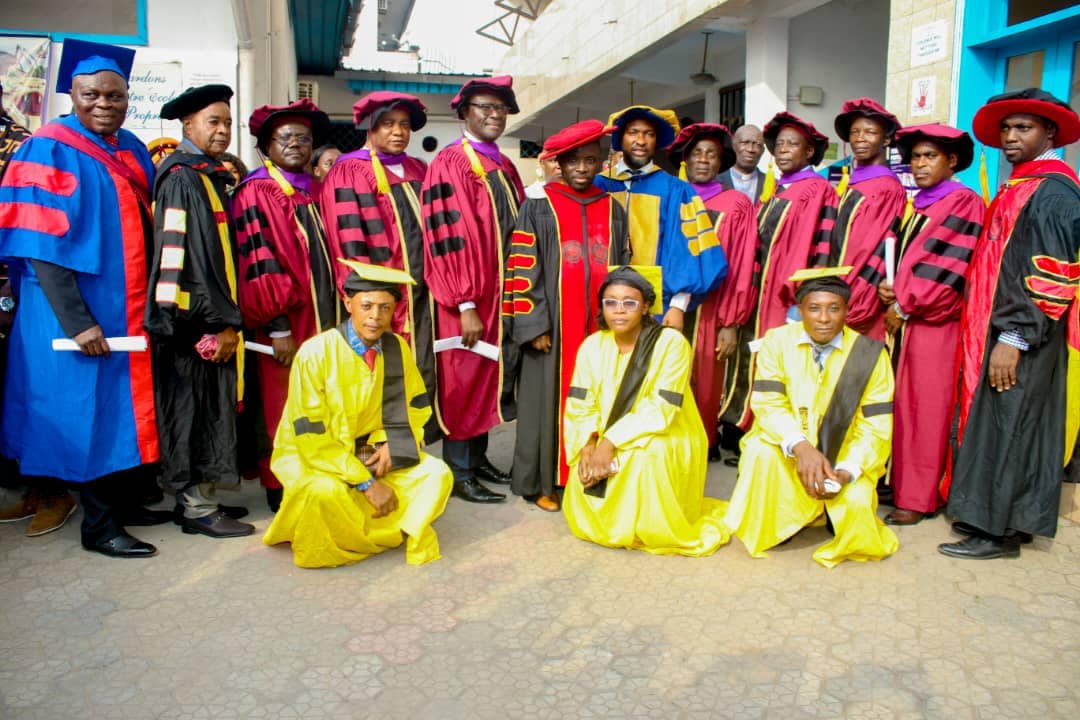
School of Ministry
Bachelor of Ministry
Three academic years · six semesters · 180 ECTS
The Bachelor of Ministry is designed to form ministers who are biblically grounded, theologically competent, spiritually mature, ethically responsible, professionally capable and practically effective in the Church and society.
- Qualification
- Bachelor of Ministry (B.Min.)
- School
- School of Ministry
- Credit value
- 180 ECTS
- Duration
- Three academic years · six semesters
- Study mode
- On-campus, online, blended and approved distance learning
- Language
- English
The School of Ministry
Ministers are formed, not only taught.
The School of Ministry of ICOF Global University exists to equip men and women for effective Christian service, leadership and ministry in the Church, Christian organizations, missions and wider society.
The School recognizes that contemporary ministry extends beyond the pulpit. Effective ministry requires biblical knowledge, theological understanding, spiritual formation, leadership, administration, communication, technology, financial stewardship, education, pastoral care, evangelism and practical service.
The School is founded upon the conviction that Christian ministers must be both formed and equipped.
Academic knowledge without character can produce competent but ineffective leadership. Spiritual passion without knowledge can produce instability and error. Ministry skill without biblical grounding can produce activity without sound foundation.
Programme aim
What a graduate will be able to do.
The Bachelor of Ministry programme aims to produce graduates capable of exercising Christian ministry responsibly in churches, missions, Christian organizations, educational institutions, community initiatives, media organizations and other ministry contexts.
- Interpret the Bible using appropriate hermeneutical principles.
- Explain major Christian doctrines.
- Understand the history and development of Christianity.
- Demonstrate spiritual maturity and ethical integrity.
- Develop and communicate biblical sermons and lessons.
- Practice pastoral care and basic Christian counseling.
- Evangelize effectively in diverse contexts.
- Make and develop disciples.
- Understand the biblical foundations of five-fold ministry.
- Exercise responsible Christian leadership.
- Establish and manage ministry programmes.
- Administer churches and Christian organizations.
- Manage financial resources ethically.
- Use digital technology in ministry.
- Develop Christian media and communications.
- Work effectively with children and young people.
- Understand missions and cross-cultural ministry.
- Participate in community development.
- Conduct basic theological and ministry research.
- Integrate academic learning with practical ministry.
Graduate profile
Five competences.
Biblical competence
Ability to understand, interpret and communicate Scripture.
Theological competence
Ability to understand and articulate Christian faith and doctrine.
Spiritual competence
Ability to cultivate prayer, worship, character, discernment and spiritual discipline.
Ministry competence
Ability to preach, teach, evangelize, disciple, counsel, lead worship and serve communities.
Organizational competence
Ability to lead teams, administer organizations, manage finances, use technology and develop sustainable ministry systems.
The curriculum
34 courses. Six semesters. 180 ECTS.
| Component | ECTS |
|---|---|
| Biblical Studies | 24 |
| Theology & Christian Thought | 24 |
| Spiritual Formation | 12 |
| Ministry Practice | 30 |
| Leadership & Administration | 18 |
| Missions & Community Ministry | 18 |
| Professional & Digital Ministry | 18 |
| Research & Academic Development | 12 |
| Elective/Specialization Studies | 12 |
| Practicum & Capstone | 12 |
| Total | 180 |
Year One — Biblical and Ministry Foundations
Semester 1
6 courses · 30 ECTS
| Code | Course | ECTS | Requires |
|---|---|---|---|
| MIN 101 | Introduction to Christian Ministry Introduces the nature, purpose and practice of Christian ministry. Students examine ministry as calling, service, stewardship and leadership.
Assessment: Reflective assignments 20% · Ministry case study 20% · Class participation 10% · Examination 50% | 5 | None |
| BIB 101 | Old Testament Survey A comprehensive introduction to the books, historical development, major themes, theology and ministry significance of the Old Testament.
Assessment: Reading assignments 15% · Biblical research project 25% · Examination 60% | 5 | None |
| BIB 102 | New Testament Survey Study of the Gospels, Acts, Pauline writings, General Epistles and Revelation.
Assessment: Reading portfolio 20% · Research assignment 20% · Examination 60% | 5 | None |
| THE 101 | Introduction to Christian Doctrine Introduction to foundational Christian doctrines including Yahuah, humanity, sin, Yahusha the Messiah, salvation, the Ruach HaQodesh, the Church and final things. Assessment: Essays 30% · Class presentations 10% · Examination 60% | 5 | None |
| SFM 101 | Spiritual Formation and Christian Character Develops spiritual disciplines and Christian character through prayer, Scripture, worship, fasting, service, accountability and reflection. Practical requirement: Students maintain a supervised spiritual formation journal. Assessment: Formation journal 30% · Practical participation 30% · Reflective paper 20% · Oral assessment 20% | 5 | None |
| COM 101 | Communication for Ministry Develops written, oral, interpersonal and public communication skills for Christian ministry. Topics: Public speaking · Interpersonal communication · Storytelling · Presentation · Conflict communication · Digital communication Assessment: Presentations 40% · Written communication 20% · Practical examination 40% | 5 | None |
Semester 2
6 courses · 30 ECTS
| Code | Course | ECTS | Requires |
|---|---|---|---|
| BIB 103 | Biblical Interpretation and Hermeneutics Students learn principles of biblical interpretation, context, genre, observation, interpretation and application. | 5 | BIB 101 or BIB 102 |
| THE 102 | Theology of Yahuah, Yahusha and the Ruach HaQodesh Study of Trinitarian theology, Christology and Pneumatology. | 5 | THE 101 |
| BIB 104 | Life and Ministry of Yahusha the Messiah Study of the person, teaching, ministry, death, resurrection and mission of Yahusha. | 5 | BIB 102 |
| MIN 102 | Prayer, Worship and Spiritual Disciplines Practical development of prayer, worship, fasting, meditation, spiritual disciplines and corporate spiritual life. | 5 | SFM 101 |
| HIS 101 | Church History I From the early Church through the Reformation. | 5 | None |
| MIN 103 | Introduction to Preaching and Teaching Introduction to sermon preparation, Bible teaching, lesson planning and public ministry. | 5 | COM 101 |
Year Two — Ministry Formation
Semester 3
6 courses · 30 ECTS
| Code | Course | ECTS | Requires |
|---|---|---|---|
| MIN 201 | Five-Fold Ministry Apostolic · Prophetic · Evangelistic · Pastoral · Teaching. Students examine the biblical foundations, functions, responsibilities, strengths and potential abuses associated with five-fold ministry.
| 5 | MIN 101, BIB 103 |
| MIN 202 | Pastoral Ministry and Shepherding Topics: Shepherding · Visitation · Baptism · Communion · Weddings · Funerals · Membership care · Crisis response · Pastoral ethics | 5 | MIN 101 |
| EVG 201 | Evangelism and Discipleship Students develop practical evangelism and disciple-making skills. Practical requirement: Supervised evangelism and discipleship activity. | 5 | MIN 101 |
| THE 201 | Theology of the Church Ecclesiology, Church identity, leadership, sacraments/ordinances, mission and community. | 5 | THE 102 |
| LEA 201 | Christian Leadership Leadership theory integrated with biblical servant leadership. Topics: Vision · Team building · Delegation · Decision-making · Conflict · Accountability · Organizational culture | 5 | MIN 101 |
| MUS 201 | Worship and Music Ministry For worship leaders, musicians, singers and worship coordinators. Topics: Theology of worship · Worship leadership · Music ministry · Choir administration · Song selection · Worship planning · Technical production · Worship-team ethics | 5 | MIN 101 |
Semester 4
6 courses · 30 ECTS
| Code | Course | ECTS | Requires |
|---|---|---|---|
| MIN 203 | Apostolic Leadership and Church Planting Students study church planting, ministry multiplication, organizational development and apostolic leadership. | 5 | MIN 201 |
| MIN 204 | Prophetic Ministry and Spiritual Discernment Topics: Biblical prophecy · Prophetic ministry · Discernment · Accountability · Ethics · Avoiding manipulation and spiritual abuse | 5 | MIN 201 |
| MIN 205 | Christian Education and Discipleship Design and management of Christian educational programmes. | 5 | MIN 103 |
| PAS 201 | Pastoral Care and Christian Counseling Introduction to pastoral counseling, grief, marriage, family, crisis and referral practices. | 5 | MIN 202 |
| ADM 201 | Church Administration and Management Topics: Church structures · Governance · Records · Human resources · Meetings · Policies · Planning · Risk management · Ministry operations | 5 | LEA 201 |
| FIN 201 | Christian Finance and Stewardship Topics: Biblical stewardship · Church budgeting · Financial controls · Fundraising · Accountability · Financial reporting · Ethical management | 5 | ADM 201 |
Year Three — Professional, Missional and Specialized Ministry
Semester 5
6 courses · 30 ECTS
| Code | Course | ECTS | Requires |
|---|---|---|---|
| MIS 301 | Missions and Cross-Cultural Ministry Study of missions, culture, contextualization, global Christianity and cross-cultural communication. | 5 | EVG 201 |
| COM 301 | Christian Media and Communications Topics: Photography · Video · Broadcasting · Social media · Podcasting · Christian journalism · Digital storytelling · Communication strategy | 5 | COM 101 |
| ITM 301 | Information Technology for Ministry A distinctive modern ministry course. Topics: Church information systems · Websites · Online services · Streaming · Church management systems · Cybersecurity awareness · Digital records · AI-assisted ministry · Online discipleship · Digital evangelism | 5 | COM 101 |
| YTH 301 | Youth and Children’s Ministry Developmentally appropriate ministry for children, adolescents and young adults. | 5 | MIN 205 |
| COM 302 | Community Development and Social Ministry Students explore Christian responses to poverty, education, health, social justice, community development and humanitarian needs. | 5 | MIS 301 |
| RES 301 | Research Methods for Ministry Topics: Research design · Literature review · Qualitative research · Quantitative research · Interviews · Surveys · Ethics · Academic writing · Citation | 5 | At least 60 ECTS completed |
Semester 6
4 courses · 30 ECTS
| Code | Course | ECTS | Requires |
|---|---|---|---|
| MIN 306 | Advanced Ministry Leadership Advanced organizational and spiritual leadership. | 5 | LEA 201, MIN 203 |
| MIN 307 | Ministry Ethics, Governance and Accountability Topics: Ministerial ethics · Power and authority · Sexual ethics · Financial accountability · Safeguarding · Governance · Transparency · Conflict of interest · Leadership accountability | 5 | ADM 201 |
| MIN 308 | Ministry Practicum Supervised practical ministry placement. | 10 | Minimum 120 ECTS |
| RES 302 | Bachelor Ministry Research Project Students conduct an approved research project addressing a significant biblical, theological, ministry, organizational or community issue. | 10 | RES 301 |
The five-fold development model
Five functions, taught as one body.
Rather than creating five isolated programmes, the School teaches students to understand the interdependence of the five ministry functions.
Apostolic
Build
Church planting, systems, pioneering, multiplication and strategic leadership.
Prophetic
Discern
Biblical proclamation, spiritual discernment, justice, truth and accountability.
Evangelistic
Reach
Evangelism, missions, outreach and multiplication of disciples.
Pastoral
Shepherd
Care, protection, healing, discipleship and community.
Teaching
Ground
Scripture, doctrine, Christian education and theological formation.
The healthiest ministry environment allows these functions to work together rather than compete with one another.
Specialization tracks
14 tracks. 56 courses.
The framework sets out fourteen ministry specializations the School intends to offer. They are published here as the School’s stated academic direction, not as provision currently open for enrolment — see the decisions still to be taken, below.
Track A
Apostolic Leadership & Church Planting
- APL 401 — Apostolic Theology
- APL 402 — Church Planting Strategies
- APL 403 — Multiplication and Movement Leadership
- APL 404 — Apostolic Organization and Networks
Prepares for: Church planting · Network leadership · Ministry development · Regional leadership · Mission expansion
Track B
Prophetic Ministry
- PRP 401 — Biblical Prophetic Ministry
- PRP 402 — Prophetic Discernment
- PRP 403 — Prophetic Ethics and Accountability
- PRP 404 — Prophetic Ministry in the Contemporary Church
Track C
Evangelism & Missions
- MIS 401 — Advanced Evangelism
- MIS 402 — Cross-Cultural Missions
- MIS 403 — Mission Strategy and Church Multiplication
- MIS 404 — Global Mission Practicum
Track D
Pastoral Ministry
- PAS 401 — Advanced Pastoral Leadership
- PAS 402 — Marriage and Family Ministry
- PAS 403 — Crisis and Grief Ministry
- PAS 404 — Pastoral Practicum
Track E
Teaching & Christian Education
- EDM 401 — Theology of Christian Education
- EDM 402 — Curriculum Development
- EDM 403 — Teaching Ministry
- EDM 404 — Christian Education Practicum
Track F
Worship & Music Ministry
- WOR 401 — Advanced Worship Leadership
- WOR 402 — Music Ministry Administration
- WOR 403 — Worship Production and Technology
- WOR 404 — Worship Ministry Practicum
Track G
Prayer & Intercession
- PRI 401 — Theology of Prayer
- PRI 402 — Intercession and Spiritual Formation
- PRI 403 — Prayer Ministry Leadership
- PRI 404 — Prayer Ministry Practicum
Track H
Christian Counseling & Pastoral Care
- COU 401 — Advanced Christian Counseling
- COU 402 — Marriage and Family Ministry
- COU 403 — Trauma, Grief and Crisis Care
- COU 404 — Pastoral Counseling Practicum
The programme should clearly distinguish pastoral counseling from regulated clinical or psychological practice where professional licensure is required.
Track I
Church Administration & Management
- ADM 401 — Advanced Church Administration
- ADM 402 — Human Resource Management in Ministry
- ADM 403 — Strategic Planning for Churches
- ADM 404 — Ministry Operations Practicum
Track J
Christian Finance & Stewardship
- FIN 401 — Advanced Ministry Finance
- FIN 402 — Church Accounting
- FIN 403 — Fundraising and Resource Development
- FIN 404 — Financial Governance and Audit
Track K
Media & Digital Ministry
- MED 401 — Digital Ministry Strategy
- MED 402 — Christian Broadcasting
- MED 403 — Social Media and Digital Evangelism
- MED 404 — Media Production Practicum
Track L
IT & Technology Ministry
- ITM 401 — Church Technology Systems
- ITM 402 — Digital Transformation for Ministry
- ITM 403 — Artificial Intelligence and Ministry
- ITM 404 — Cybersecurity and Digital Ethics
Prepares for: Church management systems · Websites · Streaming platforms · Online learning · Digital archives · AI assistants · Digital evangelism · Cybersecurity · Data management
One of the School’s distinctive future-facing tracks.
Track M
Youth & Children’s Ministry
- YCM 401 — Theology of Children and Youth Ministry
- YCM 402 — Youth Leadership
- YCM 403 — Children’s Ministry Development
- YCM 404 — Youth and Children’s Ministry Practicum
Track N
Christian Entrepreneurship
- ENT 401 — Christian Entrepreneurship
- ENT 402 — Social Enterprise and Kingdom Business
- ENT 403 — Innovation and Leadership
- ENT 404 — Entrepreneurship Practicum
The ministry of the Church is larger than the pulpit.
The School deliberately recognises the ministries the Church needs beyond the five-fold functions. Students may specialise in any of these.
- Worship
- Singers, musicians, worship leaders and production teams.
- Giving & Stewardship
- Financial stewardship, fundraising and resource development.
- Administration
- Church operations, records, governance and organizational systems.
- IT Ministry
- Technology, websites, digital systems, AI and cybersecurity.
- Media
- Video, photography, broadcasting, social media and communications.
- Education
- Sunday school, Bible school, discipleship and Christian education.
- Youth
- Youth leadership and adolescent discipleship.
- Children
- Children’s discipleship and educational ministry.
- Prayer
- Intercession and prayer leadership.
- Missions
- Cross-cultural ministry and missions.
- Community Development
- Christian social action and community transformation.
Practicum and formation
The part that cannot be done in a classroom.
The practicum is a central component of the programme. It should not be treated as simply another classroom course.
Approved settings
- Church
- Mission
- Christian organization
- School
- Community development project
- Media ministry
- Worship ministry
- Christian NGO
- Administrative ministry
- Digital ministry
- Other approved ministry setting
Ministry activities
Preaching · Teaching · Evangelism · Discipleship · Worship · Prayer ministry · Children’s ministry · Youth ministry · Administration · Media · IT · Missions · Community development · Pastoral visitation · Leadership · Event organization
What each student submits
- Ministry placement agreement.
- Supervisor evaluation.
- Ministry activity log.
- Reflective journal.
- Evidence of ministry projects.
- Ministry development plan.
- Final practicum report.
- Oral presentation.
The Ministry Formation Portfolio
Every student maintains one throughout the programme. It becomes the evidence that the student has developed beyond classroom knowledge.
Spiritual development · Ministry calling · Sermons · Teaching plans · Evangelism experience · Discipleship experience · Leadership experience · Ministry projects · Community service · Practicum · Personal reflections · Supervisor evaluations · Professional development
Assessment
Assessment should measure both what the student knows and what the student can actually do.
- Written examinations
- 30–50%
- Research papers
- 10–30%
- Practical ministry
- 20–40%
- Presentations
- 10–20%
- Projects
- 10–30%
- Ministry journals
- 10–20%
- Practicum evaluation
- 40–60%
- Capstone/dissertation
- 100% of designated course
Final year capstone
A research project, defended.
What the student must demonstrate
- Identification of a ministry problem.
- Literature review.
- Biblical/theological analysis.
- Research methodology.
- Data or ministry evidence.
- Analysis.
- Practical recommendations.
- Academic presentation.
Fields the project may address
- Church growth
- Discipleship
- African Christianity
- Evangelism
- Youth ministry
- Worship
- Digital ministry
- AI and the Church
- Church administration
- Christian leadership
- Missions
- Pastoral care
- Christian education
- Community transformation
- Theology and African society
Admission, progression and conduct
What is required, and what is expected.
Entry requirements
- A recognized secondary/high-school qualification or equivalent.
- Evidence of ability to undertake university-level study.
- Application documentation required by the University.
- Where applicable, recognition of prior learning or approved transfer credit.
The University may establish alternative admission routes for mature applicants, ministers and applicants with substantial professional or ministry experience, subject to institutional regulations.
To graduate, a student must
- Successfully complete required courses.
- Meet prerequisite requirements.
- Complete practical ministry requirements.
- Complete the practicum.
- Complete the research project.
- Satisfy University graduation requirements.
Recognition of prior learning
The School may establish a formal Recognition of Prior Learning (RPL) framework. Relevant prior learning may include:
Previous university study · Bible school · Seminary training · Ministry certificates · Professional qualifications · Documented ministry experience
Credit should be awarded only through the University’s approved academic procedures and assessment mechanisms.
Academic integrity
Academic honesty · Proper citation · Original work · Respect for intellectual property · Responsible use of AI · Honest reporting of research · Professional conduct
Use of artificial intelligence should support learning rather than replace the student’s own academic responsibility.
Ministerial ethics
Integrity · Accountability · Humility · Respect · Confidentiality · Financial responsibility · Appropriate use of authority · Sexual and relational integrity · Protection of vulnerable persons · Responsible leadership · Respect for the law · Respect for institutional governance
Safeguarding
All ministry students receive foundational safeguarding education covering children · vulnerable adults · abuse prevention · reporting responsibilities · boundaries · pastoral confidentiality · appropriate ministerial relationships · digital safeguarding.
Academic progression
Where the Bachelor sits.
The School’s stated academic ladder. Awards the University does not yet run are published here as its academic direction rather than as provision open for application; the programmes currently offered are listed on the School of Ministry page.
Certificate in Ministry
60 ECTS
Foundation-level ministry education.
Diploma in Ministry
120 ECTS
Professional ministry preparation.
Bachelor of MinistryThis programme
180 ECTS
Comprehensive undergraduate ministry education.
Master of Ministry
120 ECTS
Advanced professional ministry leadership and specialization.
Master of Theology
120 ECTS
Advanced theological scholarship.
Doctor of Ministry
Professional doctorate
Professional doctoral ministry programme.
PhD in Theology / Ministry
Research doctorate
Subject to the University’s doctoral regulations and applicable academic requirements.
Settled — the Diploma is 120 ECTS and the degree is 180.
The figure had been stated three times: 120 when the awards table was created, 180 by a later instruction and published by the site ever since, and 120 again by the School of Ministry framework §25. The University has ruled: “Diploma is 120. 180 is degree.” The catalogue, the award ladder and the database now all carry it, and the figure is stated against the LEVEL rather than against one programme, which is the form the ruling took.
Proposed Master of Ministry specializations
- Strategic Church Leadership
- Apostolic Leadership
- Pastoral Theology
- Evangelism and Missions
- Christian Education
- Worship Leadership
- Christian Counseling
- Church Administration
- Digital Ministry
- Christian Media
- Community Transformation
- African Christian Leadership
The distinctive identity of the School
The School of Ministry should not become simply another Bible school.
Biblical depth + theological rigour + spiritual formation + practical ministry + professional competence + technology + mission
This trains not only pastors and preachers, but apostles, prophets, evangelists, teachers, worship leaders, missionaries, counselors, educators, administrators, financial stewards, media ministers, IT ministers, youth leaders, children’s workers, entrepreneurs, community leaders.
Framework under approval
Four decisions the University has still to take.
This framework is proposed for University approval. Its arithmetic holds — six semesters of 30 ECTS, 180 in total, 34 courses, no repeated code, and every prerequisite naming a course that exists. Four points remain open, each an academic judgement for the University rather than a correction, and each is recorded here with the resolution the School recommends.
01
Two prerequisites cannot be satisfied as written.
FIN 201 Christian Finance and Stewardship names ADM 201 as its prerequisite, and both are in Semester 4. COM 302 Community Development and Social Ministry names MIS 301, and both are in Semester 5. A student cannot complete a course before one they are taking in the same term, so as written no student can enrol in either course on the published plan.
Recommended: Redesignate both as co-requisites — taken alongside rather than before. That preserves the academic intent, which is plainly that the finance course builds on the administration course, without moving either course between semesters or disturbing the 30-ECTS balance.
02
The fourteen specialization tracks have nowhere to go.
The component table allocates 12 ECTS to Elective/Specialization Studies, and §12 says a specialization is taken as part of that requirement. But all six semesters are filled to 30 ECTS with required courses, and a track is four courses. A student cannot take a specialization without exceeding 180 ECTS or displacing a required course, so at present the tracks are describable but not enrollable.
Recommended: Designate specific Year Three slots as elective. Semesters 5 and 6 are where the specialised courses already sit, and converting a defined number of ECTS there into elective capacity would make the tracks real without changing the total. Which courses become optional is an academic judgement for the School, so no slot has been designated here.
03
COM is used for two different subjects.
COM 101 Communication for Ministry and COM 301 Christian Media and Communications are communication courses. COM 302 Community Development and Social Ministry is not. On a transcript, “COM 301, COM 302” reads as a two-part communications sequence, and a transcript is what a credential evaluator or a receiving university actually reads.
Recommended: Give Community Development its own prefix — CDV 301 or SOC 301 — before the first cohort is enrolled. Renumbering a course after a transcript has been issued is a records problem for the lifetime of the award.
04
The track courses are numbered above the programme’s own ceiling.
The required curriculum runs 100 to 300 across three years. Every specialization track course is numbered at 400 — APL 401, PRP 401, ITM 401 and so on. On a three-year, 180-ECTS bachelor a 400-level code conventionally signals fourth-year or postgraduate study.
Recommended: Renumber the track courses at 300 level if they are undergraduate electives within the B.Min., or state explicitly that they are shared with the Master of Ministry and carry postgraduate level. Either answer is defensible; leaving it unstated is the thing that is not.
Begin the Bachelor of Ministry.
Three years, 180 ECTS, taught on campus, online, blended or by approved distance learning. Admission is enrolment: you may begin studying from the date of your offer.